




















LEBENSRAUM
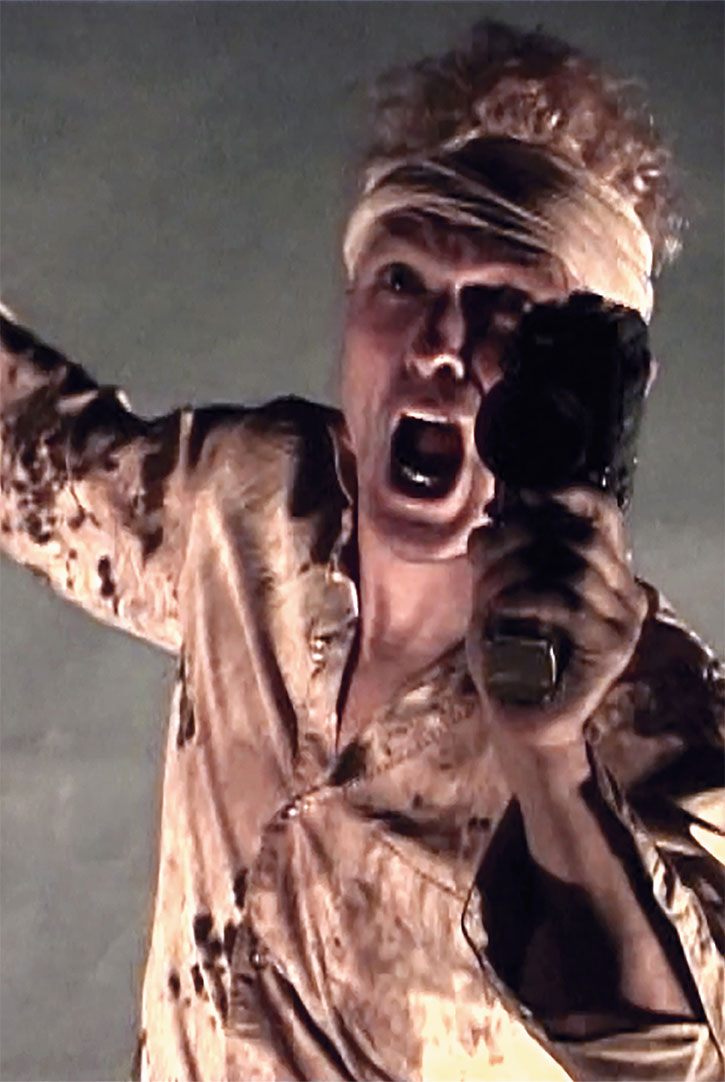
ISTVAN KANTOR
2004 | 72 min | Canada
Istvan Kantor’s Lebensraum/Lifespace – Spectacle of Noise is a tale of totalitarian control and neoist resistance. Lebensraum or ‘living space’ was a concept used by the Nazis to justify invading other countries to obtain more open land. Through RST Robotic Surveillance Transmission, the nebulous Rentagon invades the minds and bodies of the robotarians to gain greater processing power. In a futile attempt to expel as well as process the information overload, the population is transfixed in convulsive seizure reactions. A lone yogaborg of TRS Transmission Research Society strives to unravel the techno-web of this somatic colonization.
Utilizing approximately 20,000 rendered effects, Lebensraum/Lifespace – Spectacle of Noise is the culmination of Kantor’s digital processing extremes and Machine Sex Action. It is a shuddering, colour-coded allegory about the colonization of our lives by the all-pervasive entertainment/communication grid. It poses the question, are we being reduced to biological machinery units by global ideological transmission devices and kinetic control systems or are we still free thinkers?
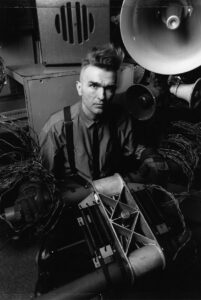
From the time of his immigration to Canada from Hungary in 1977, Istvan Kantor has created a body of work remarkable for its demonic energy, its subversive vision, and its encompassing range. He has explored mail art, music, kinetic sculpture, multi-media installation and, most prominently, performance art and video. He founded an indefinable and conspiratorial movement he called neoism. The intent of Kantor’s work has always been to disrupt closed systems of power, political and aesthetic, to lay bare the ways in which technology transforms human bodies and minds into elements of a vast robotic machine, and to confront today’s deadening systems of technological control.
His famous Blood X interventions have earned him the distinction of being banned from such elite museums as the National Gallery of Canada and the Museum of Modern Art in New York. Kantor was one of the 2004 recipients of the Governor’s General Award, the most prestigious award in Canada for achievement in the visual arts.