

EYELIGHT OBSCURA

Film by
ALEXANDRE LAROSE, DAVID RIMMER, IRINA TEMPEA, LINDSAY MCINTYRE, PIERRE HÉBERT, Pierre-Luc Vaillancourt, and RHAYNE VERMETTE


2026 | 64 minutes |

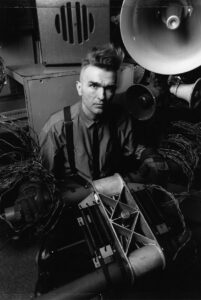
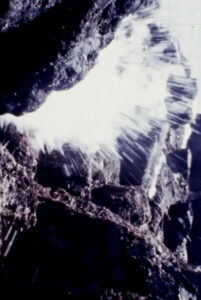
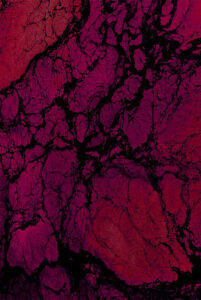
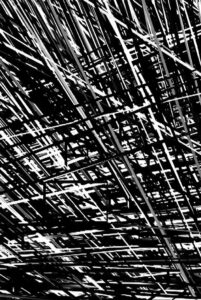
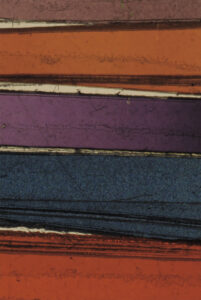
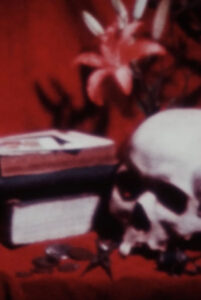
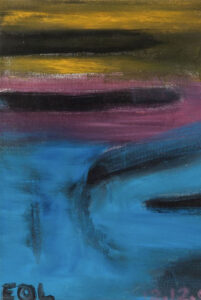
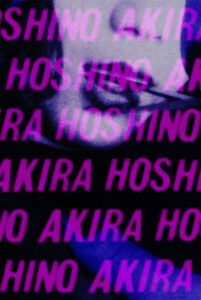
Challenging the ephemerality of reality and the suspense of the unknown, Eyelight Obscura is a motley crew of artistic visions that dissolves the boundaries between artist and audience; where the viewer becomes involved in painting raw yet defined illusion of recognition. The films embrace the transformations of both artist and subject in turn implicating the eye of the beholder in a performative metaphysical provocation that leaps beyond the frames.

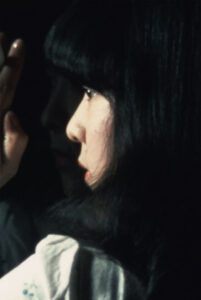
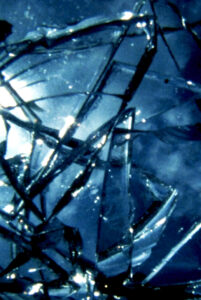
Percussive jolts of interlaced beats, rumbling to the looped image of a female figure entranced by a flicked sheet of cellophane; her intent gaze and the glaze sending glitches of chromatic oddities creating multiple personalities; these variations investigate lesser seen spaces impacted by rapid economic changes. With David Rimmer’s combinations of found film material, optical printing and timelapse cinematography, he blends an insignificant moment into an epic encounter with reality. The body person-cell and the environments occupied emerge as symbols of an enquiry into impermanence and transitory states of all material activity, where each edit enlivens the complex tapestry of impervious meanings. We observe the potentiality of constant change symbolized and overplayed; the impermanence of memory and recollections as translations of similarities. There is an enigma; a surgical process of revealing the contours of rational forms, building emerging a haunted agents bearing cracks and fragments of memories.

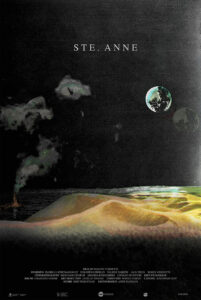
In the eye, perhaps glows a light without an urge or source, which is shed upon all that is perceived. The eyes centre on geometric forms emerging through continuous modulations of perception, slowly unfolding and moving from in-distinction towards revelation, delays in revelations of forms are rarely passive, they furnish new mysteries into the cauldron that refuse any singular narrative. Rhayne Vermette reconstructs immersive environments shaped by projections within projections and sounds within sounds, extending out of frames towards an infinity; their colours perpetually reaching the unknowable geometry of the unexplored inner worlds. Attending to such moments of wonder and awe; the subtle meaning that persists within the obscured, seeing through the cracks of built realities. These constructs of the real are where one encounters these animated geometric entities, their awesome crescendo pulsating on a pallid space; a space overladen with these shapes of an obscure geometry, each becoming a new world in itself.

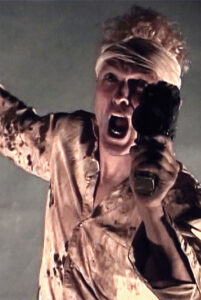
Does violence inform our sense of intactness of self, a sustained driving force that both unravels and entangles ? Battling the self is ceremoniously captured in Pierre-Luc Vaillancourt’s film, this proximity to the unknown assailant is a dynamic exploit to involve the spectator in an art of self-immolation. The reshaping of one’s nature through manipulation of the visual into a whirl of streaks bleeding across the frame; the metamorphosis of the body is brought to question in this amorphous depiction; where one wonders when the etheric interfere with the organic. And as the work resist univocal interpretations, the viewer is demanded to balance between the abstraction within the representation, to forge a coherent meaning to their own personal violence and emotional responses. The body itself manifests its becoming as a disruptive agent in a radical act of motion sculpted as fixed within an ongoing transformation, the boxing ring being a laboratory of formation.

Alexandre Larose’s film mirrors the discreet inner life of nature; in his work arises questions of whether a space, a garden or a body of water can possess a soul. These are questions interested in environments as repositories of memory; an attempt to counter impermanence of life itself. Souls of inhabitants that walked the forest are resurrected – memory of place and memory from a place, oscillating between testimony and testament. Bodies in constant conversation with nature, place and memory; the bodies seen as a primal point of departure towards sheltering the inner self. Slowed-down visuals that heighten modes of attention, evoking moments of wonder and silent contemplation of frozen time; no map of the emotions evoked. Could flying be similar to swimming ? Do birds not in the less dense water of the air ? Is this perspective a simulation of a soul in flight through memory ?

Is perception a result of geometric grids our scope of vision can accommodate ? Does reality depend on human sensorial reception ? Jacque Derrida writes about notions of a middle voice that is neither active nor passive; this voice, he mentions, recalls and announces, laying bare the forgotten. Pierre Hébert confronts this entanglement through his poetic reflections on these unfixed and unstable forms, as such the film’s sensitive nature determines fluidity that refuse rootedness and resolution, the synchronized trilling of electronic beeps and modulation of organs sounds, as a language in itself, a coded communique from a digital monitor of events yet unfolds. Through this moving, pulsating symphony, the visuals smashes into the frames leaving the viewer caught in the riddle of the profusion of geometric shapes. Stretching their delicate and entangled gestures between these senses into a choreography that explores the inner mind of improvisation. Could these be the building blocks of shape reception that ultimately orchestrates our perceived realities ?

Rather than existing outside the world as a creator, is the artist identical with the totality of the world she creates ? As through the eyes the world we enter, through her eye her brain is observed, pulsing with distorted sounds of ambulance wails and crackles of flames as light break the dark filament. A brain, lobed and morphing into a hypnotist or psychiatrist call cards; the images are what is within. The film ventures to tackle such notions of an unobserved self, delving beyond the psychological edge of reality, and creating independent meanings through a profound lyricism that fuses science and film as cousins not so distant. Irina Tempea’s film is a compendium of filmic diaries and experimental studies of the self with her radically personal translations of acts such as looking at her hands and feet (as though to prove she is not in a dream), or a mere touch of surfaces, these are filmed as events of upheaval; the artist is a sensitive chronicler of the private body and its gentle architecture.

Can thoughts interrupt the art of seeing ? Light and gelatine are in a living interplay with shadows just as sunlight filters through leaves. The relationships between images and their structure, and the emergence of forms in a generative simulation, sustains the equilibrium of surprise; where visuals interlock different passages of time rendering undifferentiated from the present moment of perception. Lindsay McIntyre’s film confronts a predetermined future with tools of imaginative transgression that births new transformative sensorial responses; generating chromatic perceptions of the in-between the real and unrealized. Providing a coherent artistic enquiry that embrace processes of decay and using the degraded fragments of memories, the film follows an intuitive visceral process of turning images into personal explorations of precognition. It invites one to the space between the margins of what is real, memories inscribed onto the landscapes, in our gardens, those delicate assemblages of flora, abiding by a dynamic construct of time and a silent vocabulary deployed across all living beings against the spectre of human wickedness.

Grounded on using self-invented tools of representation, these films derived from extreme material conditions that allow for innovation and creative interplay between metaphysics and art. Their imagery influences a view of the past as seen from the future, interrogating the variability of the self who perceives and record the present. These images are akin to echoes without a fixed origin, transformed through repeated critical engagement, new meanings being reverberated into the afterlife of history in the present; mythic poems spanning the rare streams of time. And if memory is not recovery of the past but reconstruction thereof; in many archival imagery we therefore find history as a reconstructible space, with its traces, silences and residues, acquiring meaning when viewed in the present.


Text by Paul Khahliso Matela Zisiwe

EYELIGHT OBSCURA

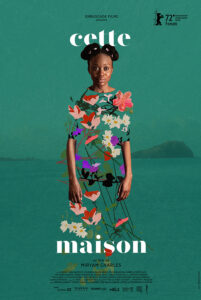
CETTE MAISON

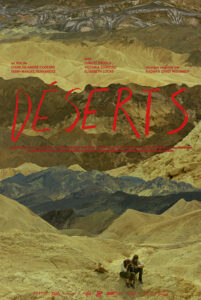
DÉSERTS

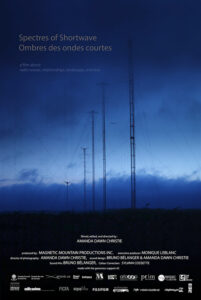
SPECTRES OF SHORTWAVE

ARCHÉOLOGIE DE LA LUMIÈRE

LEBENSRAUM

LE 100e JOUR

Team 8mm Tengoku | Selected Works

Le Chant d’Empédocle

The Valley of Time

Tetsuo Furudate | Selected Works

Eyelight Obscura

Jun Kurosawa

Ste. Anne

Rhayne Vermette

Matsushita & Nagata

Étienne O’Leary

Closed School Trilogy

Gravity and Grace

Solomon Nagler | Short Films 2

Solomon Nagler | Short Films 1

Neko-Mimi

Ruins Rider

EYELIGHT OBSCURA

Film by
ALEXANDRE LAROSE, DAVID RIMMER, IRINA TEMPEA, LINDSAY MCINTYRE, PIERRE HÉBERT, Pierre-Luc Vaillancourt, and RHAYNE VERMETTE


2026 | 64 min |

Challenging the ephemerality of reality and the suspense of the unknown, Eyelight Obscura is a motley crew of artistic visions that dissolves the boundaries between artist and audience; where the viewer becomes involved in painting raw yet defined illusion of recognition. The films embrace the transformations of both artist and subject in turn implicating the eye of the beholder in a performative metaphysical provocation that leaps beyond the frames.

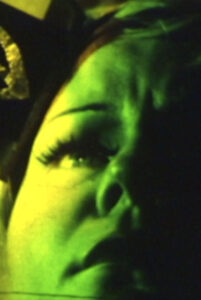
Percussive jolts of interlaced beats, rumbling to the looped image of a female figure entranced by a flicked sheet of cellophane; her intent gaze and the glaze sending glitches of chromatic oddities creating multiple personalities; these variations investigate lesser seen spaces impacted by rapid economic changes. With David Rimmer’s combinations of found film material, optical printing and timelapse cinematography, he blends an insignificant moment into an epic encounter with reality. The body person-cell and the environments occupied emerge as symbols of an enquiry into impermanence and transitory states of all material activity, where each edit enlivens the complex tapestry of impervious meanings. We observe the potentiality of constant change symbolized and overplayed; the impermanence of memory and recollections as translations of similarities. There is an enigma; a surgical process of revealing the contours of rational forms, building emerging a haunted agents bearing cracks and fragments of memories.

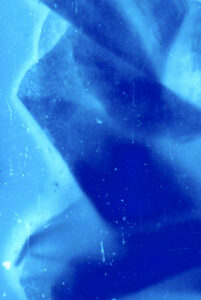
In the eye, perhaps glows a light without an urge or source, which is shed upon all that is perceived. The eyes centre on geometric forms emerging through continuous modulations of perception, slowly unfolding and moving from in-distinction towards revelation, delays in revelations of forms are rarely passive, they furnish new mysteries into the cauldron that refuse any singular narrative. Rhayne Vermette reconstructs immersive environments shaped by projections within projections and sounds within sounds, extending out of frames towards an infinity; their colours perpetually reaching the unknowable geometry of the unexplored inner worlds. Attending to such moments of wonder and awe; the subtle meaning that persists within the obscured, seeing through the cracks of built realities. These constructs of the real are where one encounters these animated geometric entities, their awesome crescendo pulsating on a pallid space; a space overladen with these shapes of an obscure geometry, each becoming a new world in itself.

Does violence inform our sense of intactness of self, a sustained driving force that both unravels and entangles ? Battling the self is ceremoniously captured in Pierre-Luc Vaillancourt’s film, this proximity to the unknown assailant is a dynamic exploit to involve the spectator in an art of self-immolation. The reshaping of one’s nature through manipulation of the visual into a whirl of streaks bleeding across the frame; the metamorphosis of the body is brought to question in this amorphous depiction; where one wonders when the etheric interfere with the organic. And as the work resist univocal interpretations, the viewer is demanded to balance between the abstraction within the representation, to forge a coherent meaning to their own personal violence and emotional responses. The body itself manifests its becoming as a disruptive agent in a radical act of motion sculpted as fixed within an ongoing transformation, the boxing ring being a laboratory of formation.

Alexandre Larose’s film mirrors the discreet inner life of nature; in his work arises questions of whether a space, a garden or a body of water can possess a soul. These are questions interested in environments as repositories of memory; an attempt to counter impermanence of life itself. Souls of inhabitants that walked the forest are resurrected – memory of place and memory from a place, oscillating between testimony and testament. Bodies in constant conversation with nature, place and memory; the bodies seen as a primal point of departure towards sheltering the inner self. Slowed-down visuals that heighten modes of attention, evoking moments of wonder and silent contemplation of frozen time; no map of the emotions evoked. Could flying be similar to swimming ? Do birds not in the less dense water of the air ? Is this perspective a simulation of a soul in flight through memory ?

Is perception a result of geometric grids our scope of vision can accommodate ? Does reality depend on human sensorial reception ? Jacque Derrida writes about notions of a middle voice that is neither active nor passive; this voice, he mentions, recalls and announces, laying bare the forgotten. Pierre Hébert confronts this entanglement through his poetic reflections on these unfixed and unstable forms, as such the film’s sensitive nature determines fluidity that refuse rootedness and resolution, the synchronized trilling of electronic beeps and modulation of organs sounds, as a language in itself, a coded communique from a digital monitor of events yet unfolds. Through this moving, pulsating symphony, the visuals smashes into the frames leaving the viewer caught in the riddle of the profusion of geometric shapes. Stretching their delicate and entangled gestures between these senses into a choreography that explores the inner mind of improvisation. Could these be the building blocks of shape reception that ultimately orchestrates our perceived realities ?

Rather than existing outside the world as a creator, is the artist identical with the totality of the world she creates ? As through the eyes the world we enter, through her eye her brain is observed, pulsing with distorted sounds of ambulance wails and crackles of flames as light break the dark filament. A brain, lobed and morphing into a hypnotist or psychiatrist call cards; the images are what is within. The film ventures to tackle such notions of an unobserved self, delving beyond the psychological edge of reality, and creating independent meanings through a profound lyricism that fuses science and film as cousins not so distant. Irina Tempea’s film is a compendium of filmic diaries and experimental studies of the self with her radically personal translations of acts such as looking at her hands and feet (as though to prove she is not in a dream), or a mere touch of surfaces, these are filmed as events of upheaval; the artist is a sensitive chronicler of the private body and its gentle architecture.

Can thoughts interrupt the art of seeing ? Light and gelatine are in a living interplay with shadows just as sunlight filters through leaves. The relationships between images and their structure, and the emergence of forms in a generative simulation, sustains the equilibrium of surprise; where visuals interlock different passages of time rendering undifferentiated from the present moment of perception. Lindsay McIntyre’s film confronts a predetermined future with tools of imaginative transgression that births new transformative sensorial responses; generating chromatic perceptions of the in-between the real and unrealized. Providing a coherent artistic enquiry that embrace processes of decay and using the degraded fragments of memories, the film follows an intuitive visceral process of turning images into personal explorations of precognition. It invites one to the space between the margins of what is real, memories inscribed onto the landscapes, in our gardens, those delicate assemblages of flora, abiding by a dynamic construct of time and a silent vocabulary deployed across all living beings against the spectre of human wickedness.

Grounded on using self-invented tools of representation, these films derived from extreme material conditions that allow for innovation and creative interplay between metaphysics and art. Their imagery influences a view of the past as seen from the future, interrogating the variability of the self who perceives and record the present. These images are akin to echoes without a fixed origin, transformed through repeated critical engagement, new meanings being reverberated into the afterlife of history in the present; mythic poems spanning the rare streams of time. And if memory is not recovery of the past but reconstruction thereof; in many archival imagery we therefore find history as a reconstructible space, with its traces, silences and residues, acquiring meaning when viewed in the present.


Text by Paul Khahliso Matela Zisiwe

EYELIGHT OBSCURA

CETTE MAISON

DÉSERTS

SPECTRES OF SHORTWAVE

ARCHÉOLOGIE DE LA LUMIÈRE

LEBENSRAUM

LE 100e JOUR

Team 8mm Tengoku | Selected Works

Le Chant d’Empédocle

The Valley of Time

Tetsuo Furudate | Selected Works

Eyelight Obscura

Jun Kurosawa

Ste. Anne

Rhayne Vermette

Matsushita & Nagata

Étienne O’Leary

Closed School Trilogy

Gravity and Grace

Solomon Nagler | Short Films 2

Solomon Nagler | Short Films 1

Neko-Mimi

Ruins Rider